The Absheron Half Day: Ramana Castle, Balakhani and the Burning Hill
One peninsula, one industry, four stops that only make sense together: a Shirvanshah watchtower standing over well pumps, an oil village repainted, a hillside that burns by itself — and the building the money bought.
Baku sits on a peninsula that has been producing oil for longer than the word "industry" has meant much of anything. Almost everything on the Absheron is legible through that single fact, and this half day puts four stops in a row that make the argument better than a museum would.
Four stops, one industry
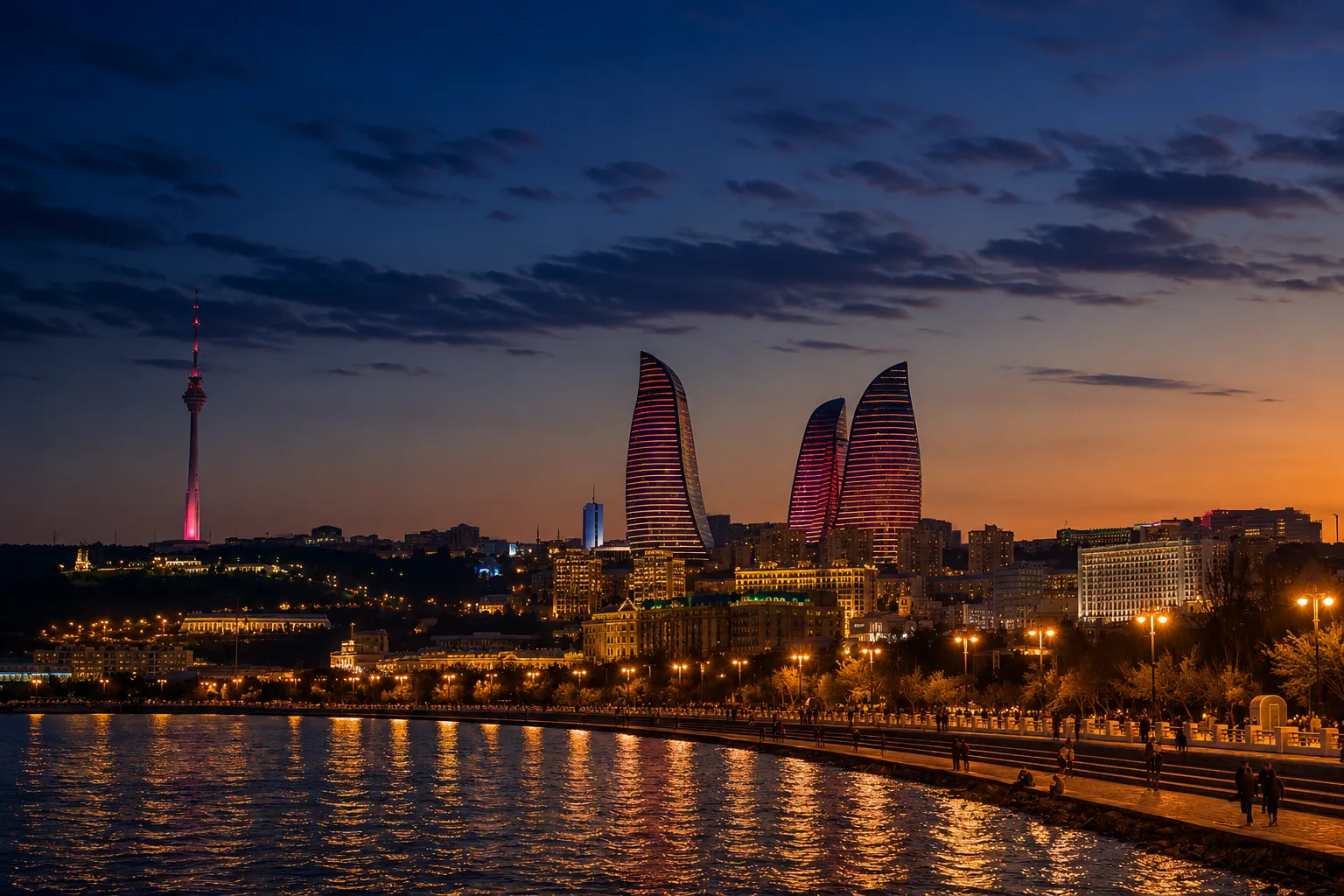
We begin where the oil comes out of the ground on its own and finish at what it paid for. Ramana Castle is a fourteenth-century Shirvanshah watchtower that now looks out over well pumps. Balakhani was a village of oil workers and is now a painted one. Yanardag is gas leaving the ground by itself and burning, which is the reason the other three are here at all. The Heydar Aliyev Center closes the day as a photo stop: Zaha Hadid's building, one of the most photographed buildings in Baku, standing where it does because of what lies under the rest of this peninsula.
What each stop actually is
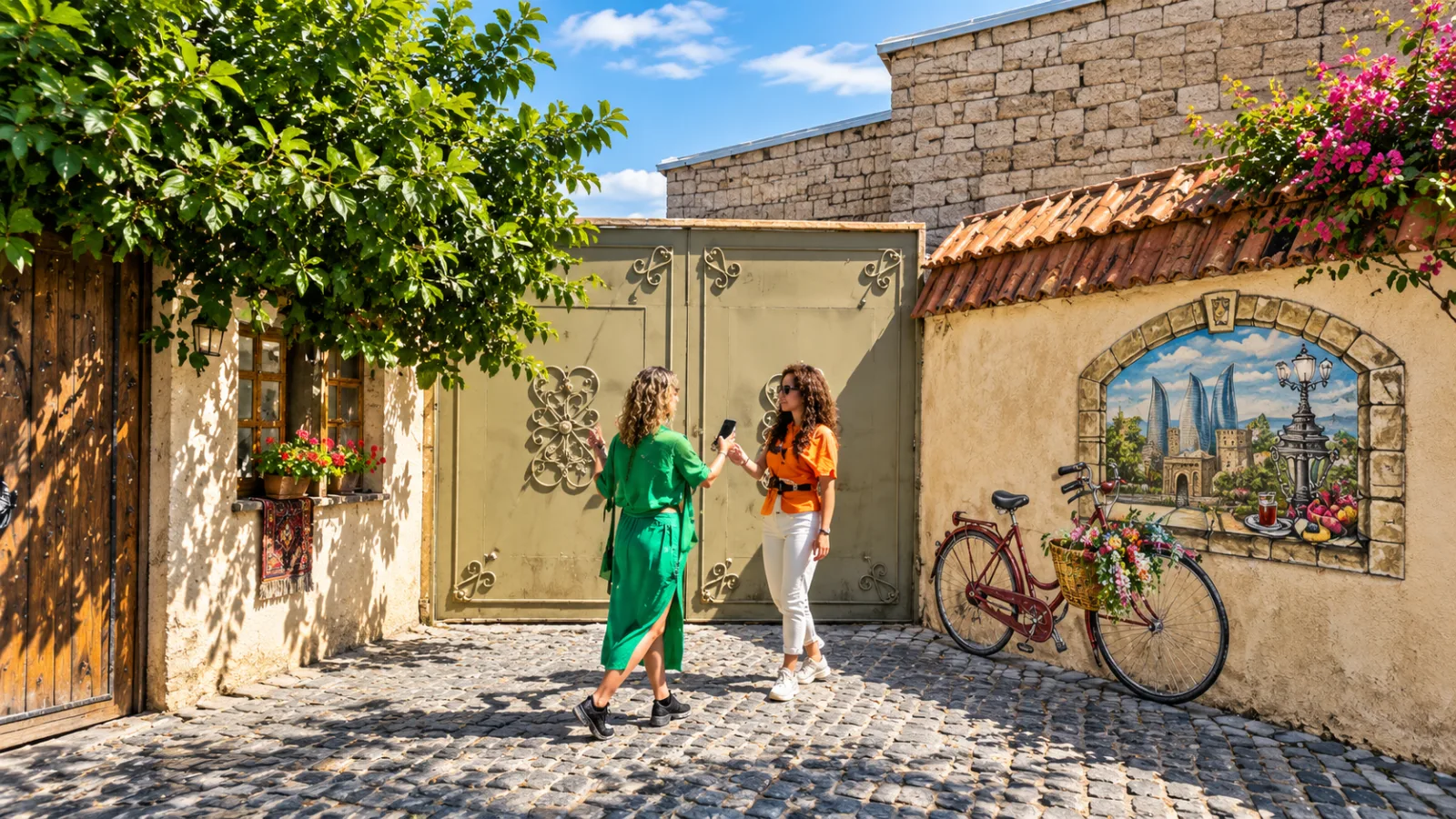
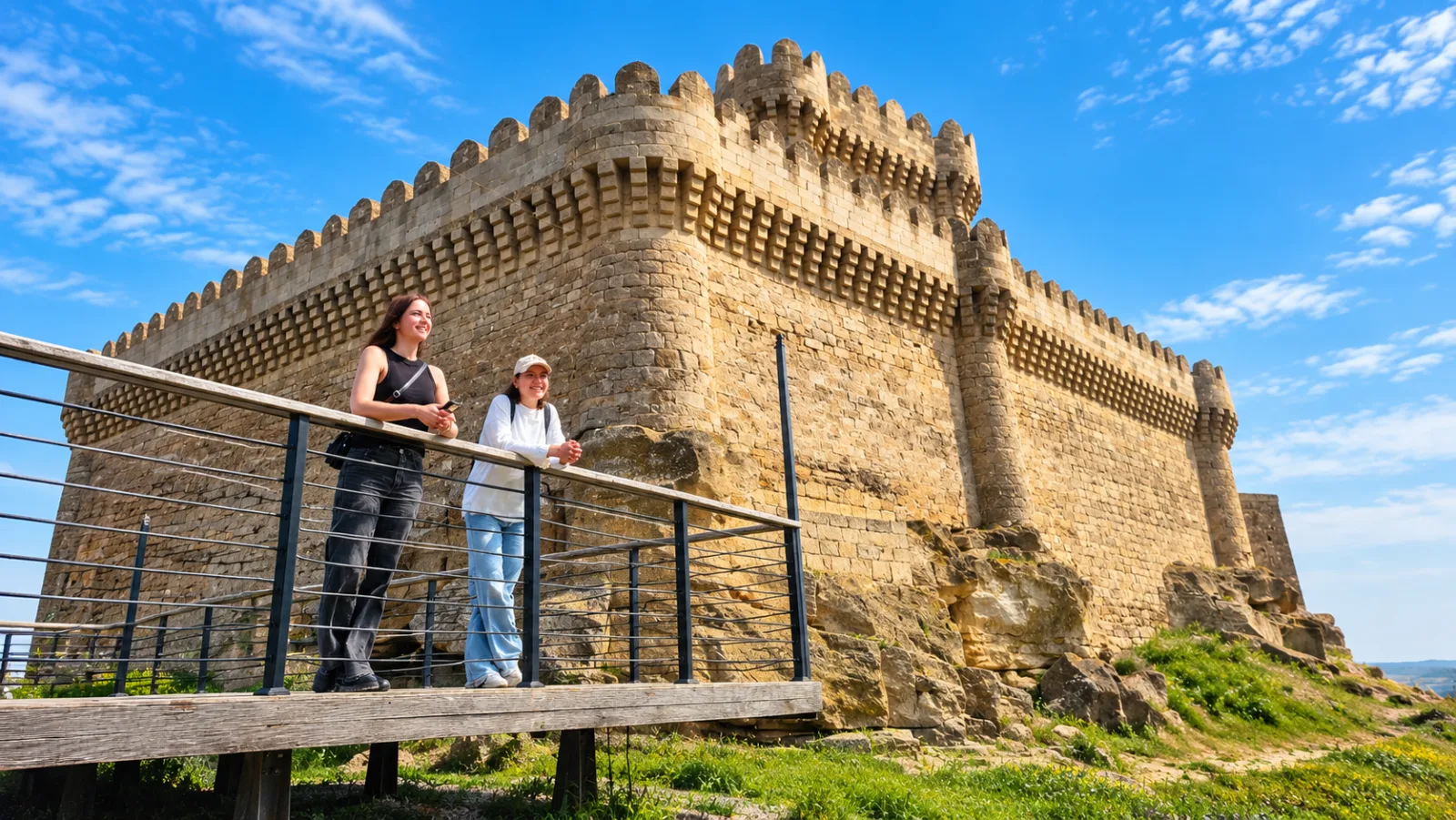
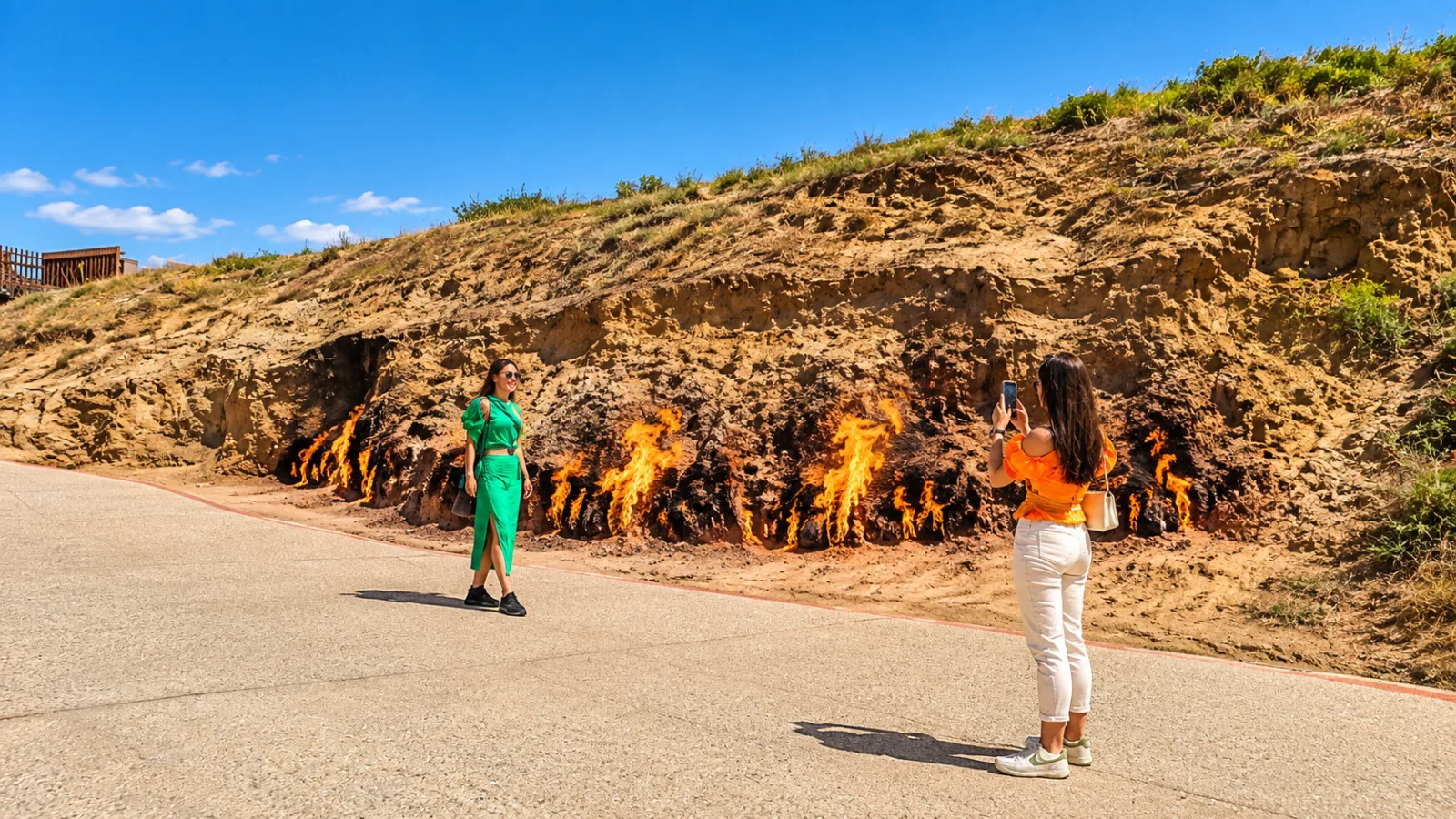
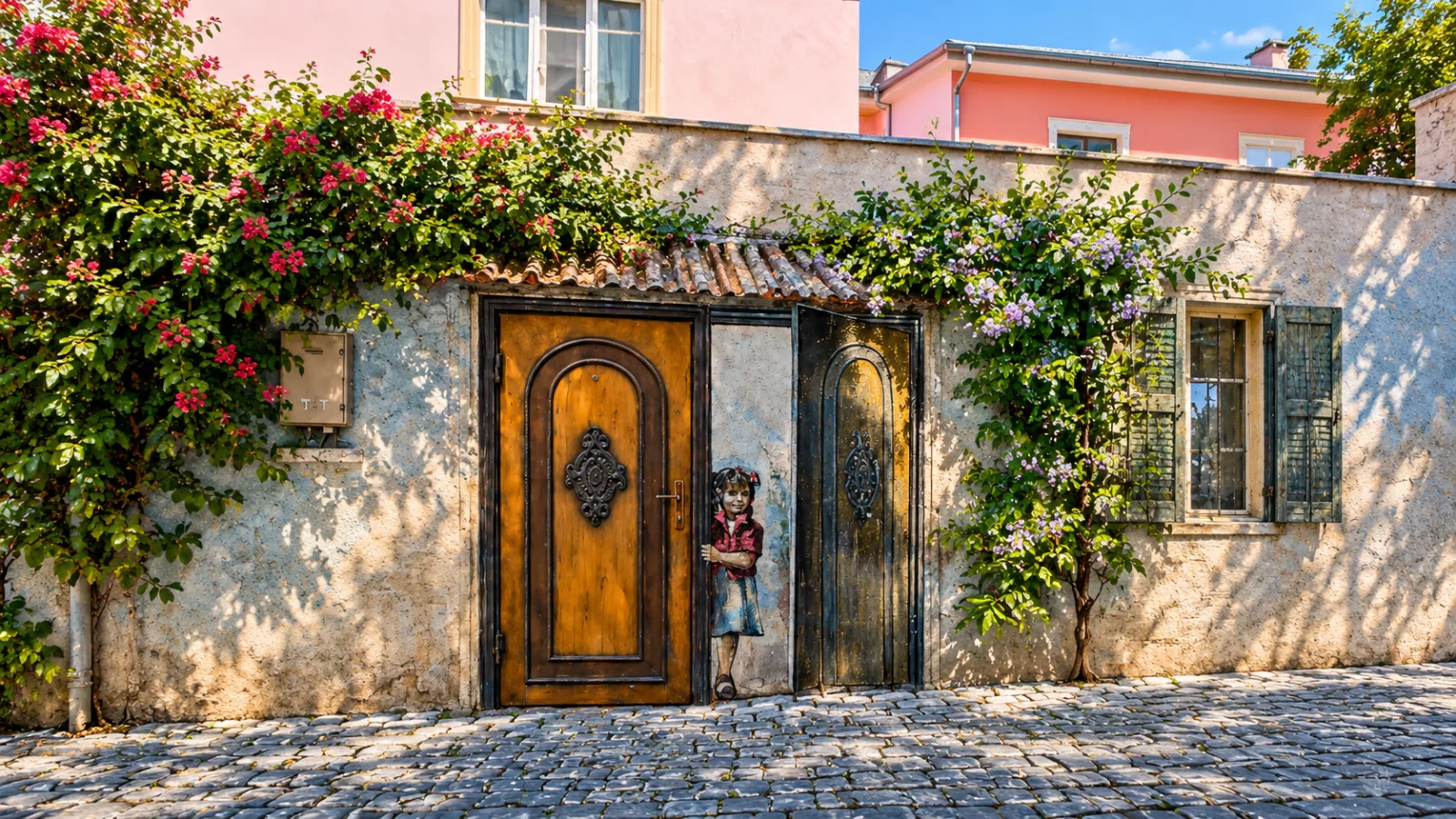
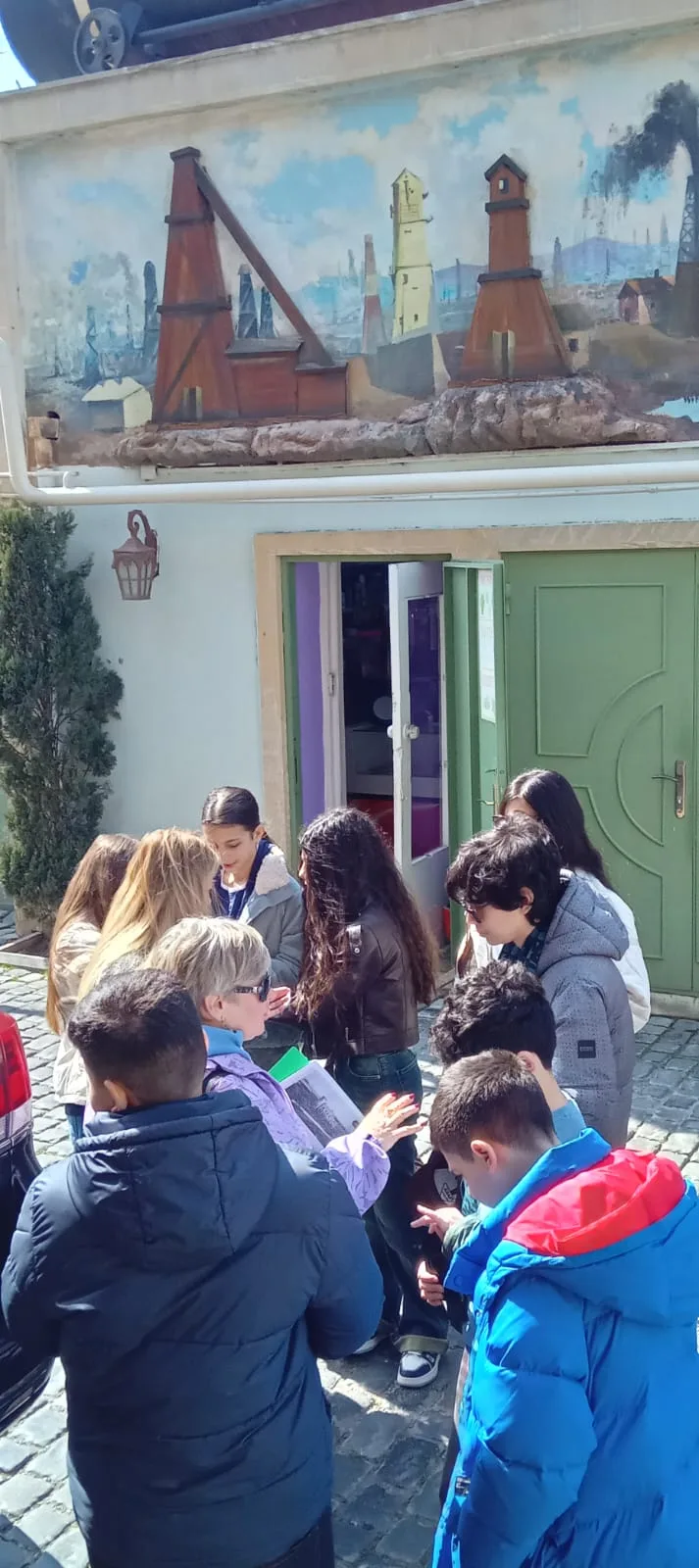
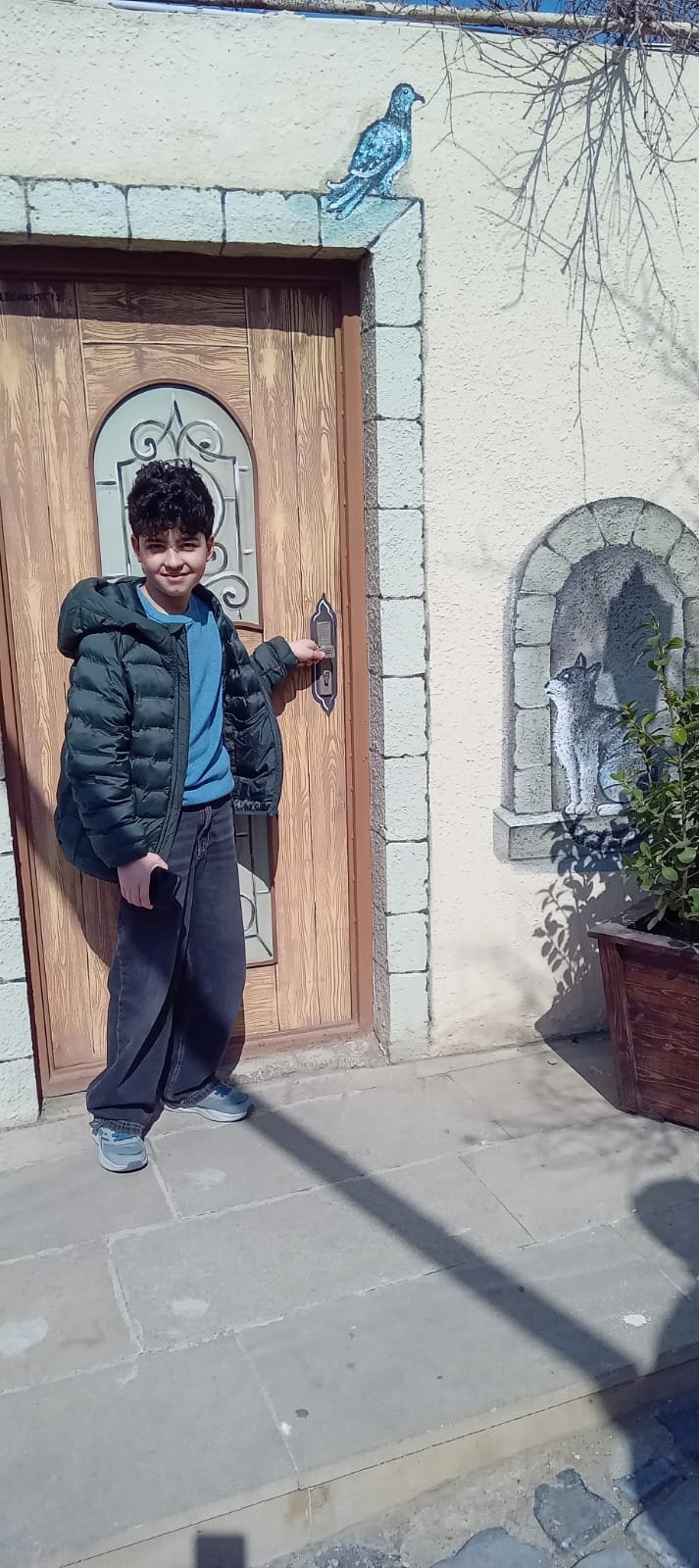
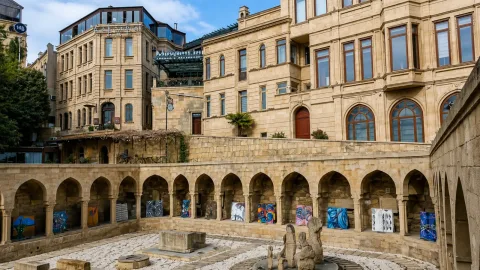
Ramana is a square keep of Absheron limestone on a low rise, with a stair to the parapet and a view worth the climb. It is a village castle rather than a monument, and the village is still around it. Balakhani's lanes were repainted in pastel with murals between the houses — which sounds like a gimmick and works, because what is underneath the paint is genuinely old. Yanardag is a low hillside where natural gas seeps out and stays alight. It is small, it is not a show, and late in the afternoon is when it looks like something.
How this differs from our other two
Yanardag is also stop five of our Gobustan and fire sites day, which runs eight hours, goes south first for the rock art and the mud volcanoes, and reaches the Absheron on the way home. If you want the petroglyphs, book that one instead. This is the half day for people who have already done Gobustan, or who want the afternoon back. The Heydar Aliyev Center also appears on Baku after dark, lit up and photographed at night; here you get it in daylight, which is a different building.
Practical
Four to five hours from a central meeting point, a group of up to eighteen and air conditioning that matters more than it sounds — the Absheron in July has no shade in it. The walking is light at every stop but goes over cobbles and stone steps at Ramana and in the old lanes, so it is not the right day for anyone who finds uneven ground hard. Entrance fees are paid where they apply.
Getting there on your own: 35 km from Baku by road. How to Get from Baku to Absheron compares a car with a driver, the intercity bus and a guided day.
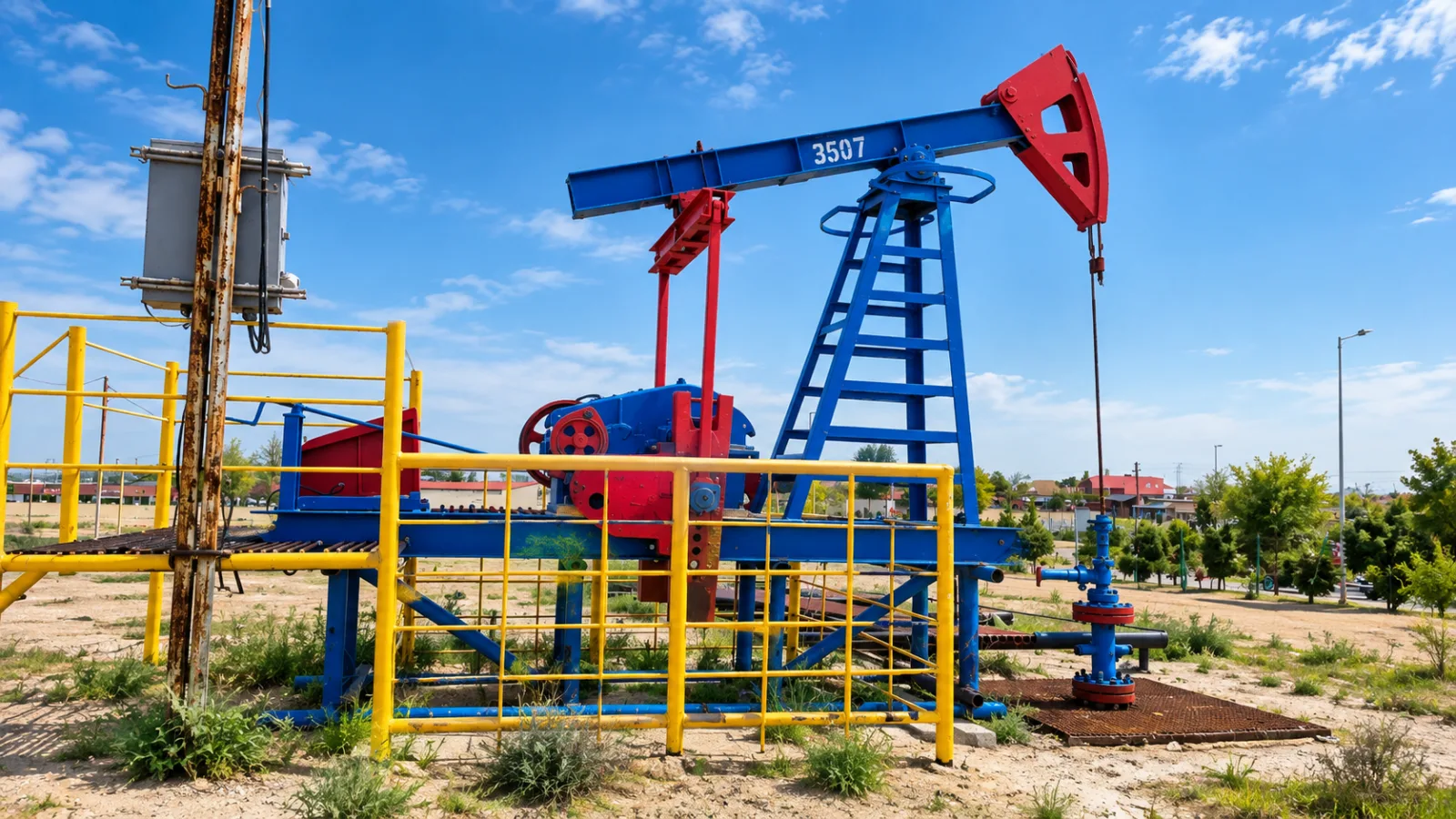
A fourteenth-century Shirvanshah watchtower in the village of the same name. Absheron limestone, a stair to the parapet, and a view over well pumps that arrived several centuries later.
Balakhani
An old oil workers' settlement whose lanes have been repainted, murals between the houses. The paint is recent; the courtyards and the stonework are not.
Yanardag
A hillside where gas leaves the ground and burns, and has done for as long as anyone locally can account for. It reads best late in the day.
Heydar Aliyev Center
The last stop, and a photo stop: fifteen minutes on the stretch of lawn that shows Zaha Hadid's building best, with the afternoon on it. We finish here because it is the answer to the other three — and because it leaves you in the city rather than out on the peninsula.
What the price covers
A guide in English, Russian or Turkish
An air-conditioned vehicle for the whole route
All four stops, with time at each rather than a drive-past
Bottled water
Paid on the day
Entrance fees where they apply
Lunch and anything you buy
Tips
Hotel pickup: the shared departure meets at 1 Azerbaijan Avenue; on a private booking it is often possible if agreed in advance
Meeting point
📍1 Azerbaijan Avenue, Baku (parking)
Frequently asked questions
Is this the same as your Gobustan day?
No. That one is eight hours, goes south for the rock art and the mud volcanoes, and only reaches the Absheron on the way back. This is four to five hours, never leaves the peninsula, and adds Ramana and Balakhani, which the long day does not have. Yanardag is the one stop they share.
Do we go inside the Heydar Aliyev Center?
No — it is the last stop of the day and a photo stop: about fifteen minutes outside, on the lawn that shows the building best. The museum keeps its own hours and sells its own ticket, and adding a visit turns a half day into a full one. Tell us before you book if you want the time for it and we will say what that does to the schedule.
Is the Ateshgah fire temple on this tour?
No. The fire temple at Surakhani sits on our Gobustan and fire sites day instead. This route keeps to the north of the peninsula.
How much walking is there?
Light at every stop, but over cobbles at Ramana and stone steps up to its parapet, and along village lanes at Balakhani. Perhaps an hour on your feet across the whole afternoon.
When is Yanardag at its best?
Late afternoon, when the flames have something darker to burn against. It is alight all day, but at noon it photographs like a small bonfire.
Can we bring children?
Yes. Four short stops in four to five hours suits them better than a twelve-hour drive does, and a burning hillside tends to outlast the rest of the day in their memory. Children between three and eleven have their own rate; under-twos travel free.
What happens if it rains?
Ramana has no roof and Yanardag is an open hillside, so heavy rain takes the best of both. We move you to another date or refund you in full, whichever you would rather.
How long does the tour take?
The tour takes approximately 4–5 hours.
Where does the tour depart from?
The tour departs from 1 Azerbaijan Avenue, Baku (parking).
What languages is the tour available in?
The tour is available in English, Russian, Turkish.
How much does the tour cost?
Pricing starts at ₼ 50 per person. The final price depends on your group size and the date you choose.
How do I book this tour?
You can book directly on this page — choose your date and number of travellers and confirm. Our team will then reach out to confirm the details.
Anyone who travelled with us can leave a review — booking on this site is not required. How we collect reviews
Write a review
S
Svetlana N.· New York, US
★★★★★· 25 Sep 2026
A perfect day on Absheron natural miracles
I enjoy rich history - medieval castle near Baku!!
Balakhany is like a fairytale - amazing blend of heritage from Shirvanshakh' epochs and Petroleum Boom plus modern design like Santorini!
 Tours From Baku
 EN
EN  RU
RU  AR
AR  HE
HE  DE
DE  ZH
ZH